

The connection between jobs reports and mortgage rates isn't immediate, but rather functions through a chain of reactions. Here's a breakdown of the key factors involved:
1. Economic Outlook and Investor Expectations:
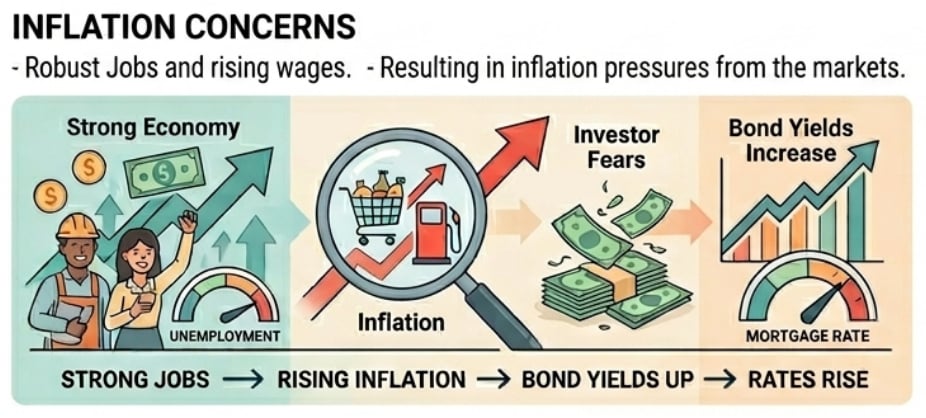
Strong Jobs Report: When a jobs report reveals robust job growth, falling unemployment, and rising wages, it indicates a healthy, growing economy. Investors interpret this as a sign of future economic strength and increased consumer spending, which can lead to higher inflation.
Inflation Concerns: Rising inflation erodes the purchasing power of fixed-income investments, like bonds. To compensate for this, bond yields (the return on investment) increase.
Bond Market Connection: Mortgage rates are closely linked to long-term government bond yields, particularly the 10-year Treasury note. When bond yields rise, mortgage lenders typically adjust their rates upwards to reflect the increased cost of borrowing.
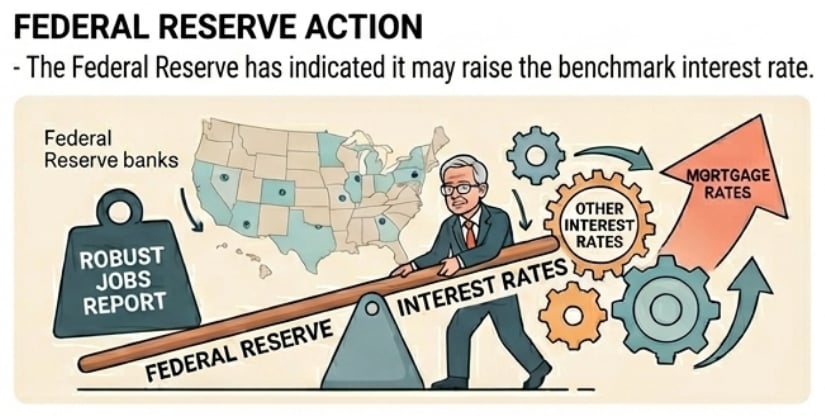
Federal Reserve Action: The Federal Reserve, the central bank of the United States, uses interest rates to manage inflation. A consistently strong jobs report may prompt the Fed to raise its benchmark interest rate, which can contribute to higher overall interest rates, including mortgage rates.
2. Consumer Confidence and Spending:
Strong Jobs Report: Solid job creation and wage growth boost consumer confidence. People feel more secure about their finances and are more likely to make large financial commitments, such as purchasing a home. This increased demand for housing can put upward pressure on prices.
Weak Jobs Report: Conversely, a weak jobs report with poor job growth, rising unemployment, and sluggish wage growth can dampen consumer confidence. People become more cautious about spending and may delay homeownership plans, leading to reduced demand and potentially lower housing prices.
3. Mortgage Lender Sentiment:
Risk Assessment: Mortgage lenders carefully analyze jobs reports to assess the creditworthiness of borrowers and the overall health of the housing market. A strong jobs report, indicating stable employment and higher incomes, can lead to increased lender confidence and a greater willingness to offer favorable loan terms.
Pricing Decisions: Lender pricing decisions are also influenced by their expectations for future interest rate movements. If they anticipate rates will rise, they may proactively adjust their mortgage rates upwards to protect themselves from potential losses.
Summary of Influence on Mortgage Rates:
Strong jobs report = higher inflation concerns = higher bond yields = higher mortgage rates.
Weak jobs report = lower inflation concerns = lower bond yields = lower mortgage rates.
How Jobs Reports Influence the Housing Market
The influence of jobs reports on the housing market is a complex interplay of various factors. Here's a look at the key ways these reports shape the landscape:
1. Housing Demand:
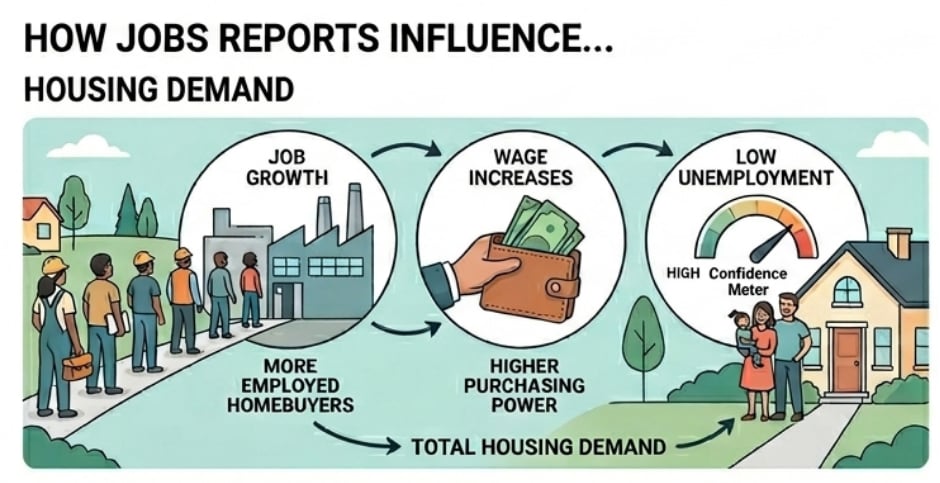
Job Growth: The creation of new jobs directly affects housing demand. When more people are employed, there's a larger pool of potential homebuyers, increasing the overall demand for properties.
Wage Increases: Rising wages enhance the purchasing power of consumers, enabling them to afford larger mortgages and potentially higher home prices. This can further drive up housing demand and contribute to price appreciation.
Unemployment Rate: A low unemployment rate indicates a strong job market, boosting consumer confidence and making people more comfortable taking on homeownership responsibilities.
2. Housing Supply:
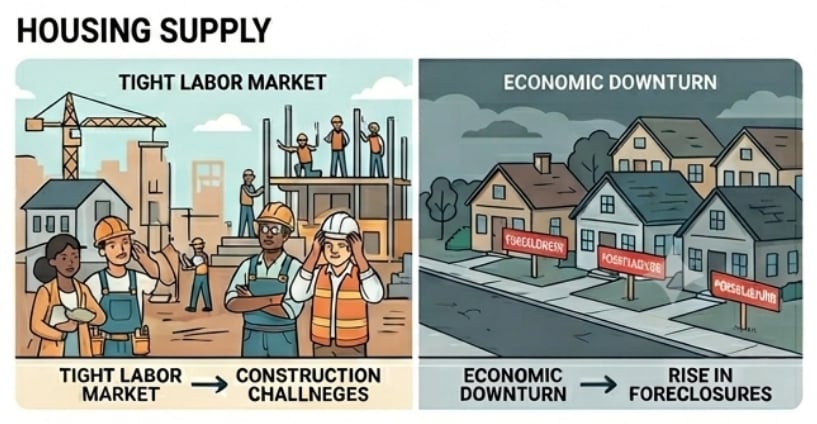
Construction Activity: Jobs reports provide insights into the labor market's ability to support construction activity. A tight labor market with low unemployment can lead to higher labor costs for builders, potentially impacting the supply of new homes.
Foreclosure Rates: Economic downturns, as reflected in weak jobs reports with rising unemployment, can lead to increased foreclosure rates. A surge in foreclosures can flood the market with properties, potentially driving down housing prices.
3. Real Estate Brokerage Industry:
Transaction Volume: The health of the jobs market directly impacts real estate transaction volume. A robust job market leads to more home sales and purchases, benefiting real estate agents and brokers.
Market Activity: A strong jobs report can stimulate real estate activity, leading to more listings, showings, and overall market dynamism.
4. Mortgage Industry:
Loan Volume: A healthy jobs market generates higher loan volume for mortgage lenders and originators. More people are buying homes, requiring mortgages.
Refinance Activity: Fluctuations in mortgage rates, influenced by jobs reports, can also impact refinance activity. When rates drop, homeowners may choose to refinance their existing mortgages to secure a lower rate.
Conclusion
The monthly jobs report is a crucial piece of information for anyone involved in the housing market, from prospective homebuyers and sellers to real estate agents, mortgage lenders, and construction professionals. By understanding how jobs reports influence mortgage rates and the broader housing landscape, you can make informed decisions about timing your home purchase, pricing your property, and planning your overall housing strategy.
It's important to note that jobs reports are just one of many factors that shape the housing market. Other variables, such as interest rate policy from the Federal Reserve, global economic conditions, housing inventory levels, and local market dynamics, also play significant roles. Therefore, a comprehensive understanding of all these factors is essential for making informed real estate decisions.
Understanding mortgage rates is about more than watching the Fed. Employment trends, wage growth, and economic conditions all play a role in shaping today's housing market.
Whether you're buying, selling, or investing, having the right market insight can help you make more informed decisions.
Contact June Chang at 917-657-5198 for personalized real estate guidance and local market expertise.