When preparing to sell your home, it's tempting to fix every flaw in hopes of getting the highest possible price. However, not every repair or renovation will increase your home's value—and some projects may actually cost more than they'll ever return.
The key is knowing which repairs are worth making and which ones you can confidently skip. A strategic approach can help you maximize your return while getting your home on the market faster.
Don't Assume Every Renovation Adds Value
Many homeowners believe a complete makeover is necessary before listing their property. In reality, buyers are often more concerned about a home's condition, functionality, and price than expensive cosmetic upgrades.
Large renovation projects can delay your listing, increase your expenses, and still fail to deliver a full return on investment.
Repairs You Can Usually Skip
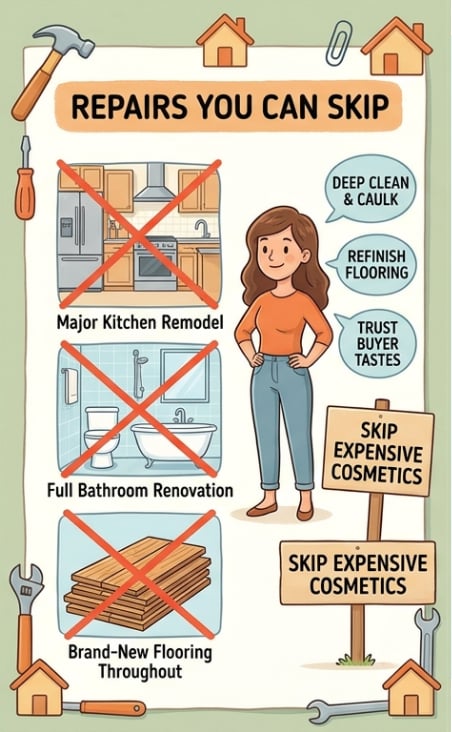
Major Kitchen Remodels
A brand-new kitchen may look impressive, but it's rarely the best investment right before selling.
Buyers often have their own design preferences and may plan to renovate after moving in. Spending tens of thousands of dollars on new cabinets, countertops, and appliances doesn't necessarily translate into a higher selling price.
Complete Bathroom Renovations
Unless the bathroom has serious functional issues, a full remodel is usually unnecessary.
Instead of replacing everything, consider:
- Replacing worn caulk
- Deep cleaning grout
- Updating mirrors or light fixtures
- Repairing minor leaks
Small improvements can make the space feel fresh without the cost of a full renovation.
Brand-New Flooring Throughout the Home
Installing new carpet or replacing perfectly functional flooring often provides limited value.
If hardwood floors are in decent condition, refinishing them may be enough. If carpets are clean but dated, many buyers will prefer choosing their own flooring after purchase.
Trendy Design Upgrades
Avoid spending money on:
- Designer light fixtures
- Bold accent walls
- Luxury tile
- Custom built-ins
- Highly personalized finishes
These upgrades reflect personal taste and may not appeal to every buyer.
Functional Windows and Appliances
Older windows and appliances don't always need replacing.
If they're working properly and don't present safety concerns, many buyers will accept them as part of the home's overall condition—especially if the home is priced appropriately.
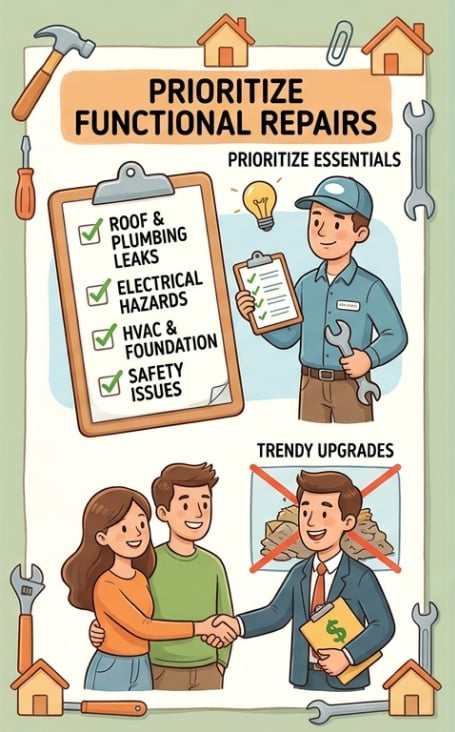
What You Should Fix Before Listing
While many cosmetic upgrades can wait, certain repairs deserve immediate attention because they can affect financing, inspections, or buyer confidence.
Prioritize:
- Roof leaks
- Plumbing leaks
- Electrical hazards
- HVAC systems that don't work properly
- Structural or foundation issues
- Water damage
- Safety concerns such as loose railings or exposed wiring
These issues can delay closing, reduce buyer interest, or even prevent mortgage approval.
First Impressions Matter More Than Expensive Renovations
Instead of investing in major remodeling projects, focus on affordable improvements that make your home feel well cared for.
Consider:
- Professional deep cleaning
- Fresh neutral paint where needed
- Pressure washing exterior surfaces
- Touch-up landscaping
- Decluttering and depersonalizing rooms
- Replacing burned-out light bulbs
- Cleaning windows
These simple updates often create a stronger first impression than expensive renovations.
Consider Offering a Seller Credit

If your home has older but functional features, offering a repair credit can be a smart alternative.
Instead of replacing appliances or remodeling a bathroom, you may choose to provide a credit at closing, allowing buyers to update the home according to their own preferences.
This approach can:
- Save you renovation costs
- Speed up the selling process
- Give buyers more flexibility
- Help negotiations move more smoothly
Every Market Is Different
The amount of preparation your home needs depends on local market conditions.
In a strong seller's market, buyers are often more willing to overlook cosmetic imperfections because inventory is limited.
In a more balanced or buyer-friendly market, presentation becomes increasingly important. Clean, well-maintained homes tend to stand out, even without major renovations.
Seller's Tip
Before spending thousands on renovations, consult a local real estate professional who understands your neighborhood and current buyer expectations.
The goal isn't to create a brand-new home—it's to present a well-maintained property that offers buyers confidence and value.
Sometimes, spending less before listing can actually leave more money in your pocket at closing.
Preparing your home for sale doesn't have to mean spending thousands on renovations. Knowing which improvements add value—and which don't—can help you sell faster and keep more money in your pocket.
If you're thinking about selling your home and want personalized advice on which updates are truly worth making, contact June Chang at 917-657-5198 for a professional consultation and local market expertise.