
Buying a home is one of the biggest financial decisions you'll ever make, and the mortgage application is a critical part of that journey. While the process may seem complicated at first, understanding each step ahead of time can help reduce stress, avoid costly mistakes, and improve your chances of loan approval.
Whether you're a first-time homebuyer, upgrading to a larger home, or purchasing an investment property, preparing your finances before applying for a mortgage can make the entire experience smoother and more successful.
In today's market, where mortgage rates and lending standards continue to evolve, being well-prepared isn't just helpful—it's a competitive advantage.
Why Preparing Before You Apply Matters
Many buyers believe the mortgage process begins when they meet with a lender. In reality, it starts much earlier.
Lenders want to see that you have a stable financial foundation and the ability to comfortably repay the loan over time. The stronger your financial profile, the more mortgage options you may qualify for.
Preparing early can help you:
- Understand your homebuying budget
- Improve your credit profile before applying
- Increase your chances of loan approval
- Potentially qualify for better interest rates
- Avoid unnecessary delays during underwriting
Think of mortgage preparation as laying the foundation before building a home—the stronger the foundation, the smoother everything else becomes.
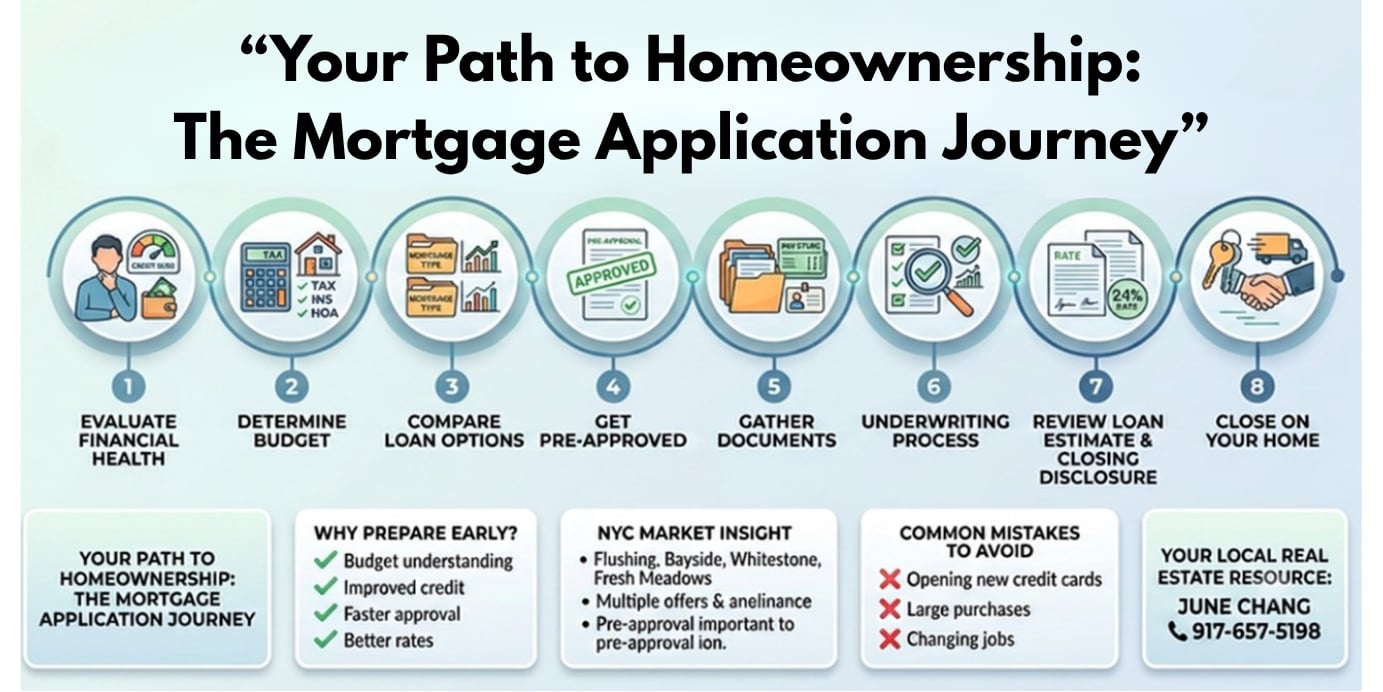
Step 1: Evaluate Your Financial Health
Before shopping for homes, take a close look at your overall financial situation.
Most lenders review several key factors, including:
- Credit score
- Income
- Employment history
- Existing monthly debt
- Savings
- Debt-to-income (DTI) ratio
It's also wise to check your credit report for errors and pay down high-interest debt whenever possible. Even a small improvement in your credit score may help you qualify for more favorable loan terms.
Remember, the goal isn't simply getting approved—it's qualifying for a mortgage that's comfortable for your long-term budget.
Step 2: Determine What You Can Comfortably Afford
Just because you're approved for a certain loan amount doesn't mean you should borrow the maximum.
When creating your homebuying budget, consider more than just the monthly mortgage payment.
You'll also need to account for:
- Property taxes
- Homeowners insurance
- HOA or maintenance fees (if applicable)
- Utilities
- Home maintenance
- Emergency savings
- Future lifestyle expenses
Buying within your comfort zone helps reduce financial stress after you move into your new home.
Step 3: Compare Different Mortgage Options
Not every mortgage is the same.
Depending on your financial situation, you may qualify for several different loan programs, including:
- Conventional loans
- FHA loans
- VA loans
- USDA loans
- Fixed-rate mortgages
- Adjustable-rate mortgages (ARMs)
Each loan has different eligibility requirements, down payment options, and interest rate structures.
Taking time to compare loan programs can help you choose one that fits both your current needs and long-term financial goals.
Step 4: Get Pre-Approved Before You Start House Hunting
One of the smartest things you can do before touring homes is obtain a mortgage pre-approval.
Unlike a simple pre-qualification, a pre-approval involves a lender reviewing your financial documents and estimating how much you're eligible to borrow.
Benefits of getting pre-approved include:
- Knowing your realistic price range
- Strengthening your offer
- Moving more quickly once you find the right home
- Giving sellers greater confidence in your financing
NYC Market Insight
In neighborhoods like Flushing, Bayside, Fresh Meadows, Whitestone, Little Neck, and Douglaston, well-priced homes can still attract multiple offers.
Having a pre-approval letter before you begin your home search allows you to act quickly when the right property becomes available.
Step 5: Gather Your Financial Documents
Once your offer is accepted, your lender will request documentation to verify your financial information.
Common documents include:
- Government-issued ID
- Recent pay stubs
- W-2s or tax returns
- Bank statements
- Employment verification
- Investment account statements (if applicable)
Providing complete and accurate documentation early helps prevent unnecessary delays during underwriting.
Step 6: Understand the Underwriting Process
Many buyers worry when they hear the word "underwriting," but it's simply the lender's process of verifying your financial information.
During underwriting, your lender reviews:
- Income
- Employment
- Credit history
- Assets
- Existing debt
- Property appraisal
- Title information
Don't be surprised if the lender requests additional documentation. This is completely normal and doesn't necessarily indicate a problem with your loan.
Responding promptly helps keep your closing timeline on track.
Step 7: Review Your Loan Estimate and Closing Disclosure
Before closing, you'll receive documents outlining your loan terms and estimated costs.
Take time to review:
- Interest rate
- Monthly payment
- Loan fees
- Closing costs
- Cash required at closing
If something doesn't look right, ask questions before signing.
Understanding your mortgage today can prevent surprises after you become a homeowner.
Step 8: Close on Your New Home
Closing is the final step of the mortgage process.
During closing, you'll:
- Sign loan documents
- Pay your down payment and closing costs
- Finalize ownership
- Receive your keys
Congratulations—you've officially become a homeowner!
Common Mortgage Mistakes That Can Delay Approval
Even after you've been pre-approved, it's important to keep your finances stable until closing.
Avoid these common mistakes:
- Opening new credit cards
- Financing a new vehicle
- Making large purchases on credit
- Missing bill payments
- Making large unexplained bank deposits
- Changing jobs without consulting your lender
Many lenders perform one final review before funding your loan, so maintaining financial stability throughout the process is essential.
Mortgage Application Checklist
Before submitting your application, make sure you have the following:
Item | Ready? |
|---|---|
Government-issued ID | ✓ |
Recent pay stubs | ✓ |
Last two years of tax returns | ✓ |
W-2s or 1099s | ✓ |
Bank statements | ✓ |
Employment information | ✓ |
Down payment funds | ✓ |
Emergency savings | ✓ |
Mortgage pre-approval | ✓ |
What Homebuyers in Queens and NYC Should Know
Buying a home in New York City comes with unique considerations beyond the mortgage itself.
In Queens neighborhoods such as Flushing, Bayside, Whitestone, Fresh Meadows, and Douglaston, buyers should budget for additional costs, including:
- Attorney fees
- Home inspections
- Property taxes
- Homeowners insurance
- Condo or co-op maintenance fees (when applicable)
- Closing costs
Working with a knowledgeable local real estate professional can help you understand these expenses early, so there are fewer surprises later in the process.
Frequently Asked Questions
How long does the mortgage application process take?
Most mortgage applications take about 30 to 45 days from contract to closing, although timelines vary depending on the lender, property, and how quickly documents are submitted.
What credit score do I need?
The minimum credit score depends on the loan program. Generally, higher credit scores can improve your chances of qualifying for lower interest rates and better loan terms.
What's the difference between pre-qualification and pre-approval?
A pre-qualification is an initial estimate based on information you provide. A pre-approval involves a more detailed review of your finances and is typically viewed as stronger by sellers.
Should I pay off all my debt before buying?
Not necessarily. Instead of eliminating every debt, focus on maintaining a healthy debt-to-income ratio and keeping enough savings for your down payment, closing costs, and emergency expenses.
Can I change jobs while buying a home?
Major employment changes during the mortgage process can affect your approval. If you're planning a job change, discuss it with your lender before making any decisions.
Who Should Read This Guide?
This guide is ideal for:
- First-time homebuyers
- Buyers moving to Queens or NYC
- Families upgrading to a larger home
- Downsizers planning their next move
- Investors financing residential properties
Key Takeaways
Applying for a mortgage doesn't have to be overwhelming. With the right preparation, you can move through each stage with confidence and avoid many of the common pitfalls that delay approvals.
Review your finances early, compare loan options, get pre-approved before house hunting, and keep your financial situation stable throughout the buying process. These steps can help you secure the right mortgage and put you in a stronger position when it's time to make an offer.
Most importantly, remember that every buyer's situation is unique. Taking the time to understand your options and working with experienced professionals can make your homebuying journey far less stressful.
Your Local Real Estate Resource
Whether you're buying your first home, selling a property, upgrading to a larger space, or investing in real estate, understanding today's market is the first step toward making informed decisions.
June Chang proudly serves buyers and sellers throughout Queens, Flushing, Bayside, Whitestone, Fresh Meadows, Little Neck, Douglaston, College Point, Forest Hills, Rego Park, Elmhurst, Jackson Heights, Astoria, Long Island City, Kew Gardens, Kew Gardens Hills, Jamaica, Richmond Hill, Brooklyn, Manhattan, and Long Island.
For personalized guidance, local market expertise, and professional real estate services, contact June Chang today.
June Chang | JuneNYC Team
www.JuneChangNYC.com
Queens & NYC Seller Agent
Helping clients buy, sell, and rent in Flushing, Bayside, Whitestone, Astoria, LIC, and throughout NYC. Speaks Chinese (Mandarin & Taiwanese).